
Triggering lockdown is no longer a last resort. It’s a safeguarding essential.
Can you actually respond respond when something happens? Tim highlights important questions around school lockdown and safeguarding policy.
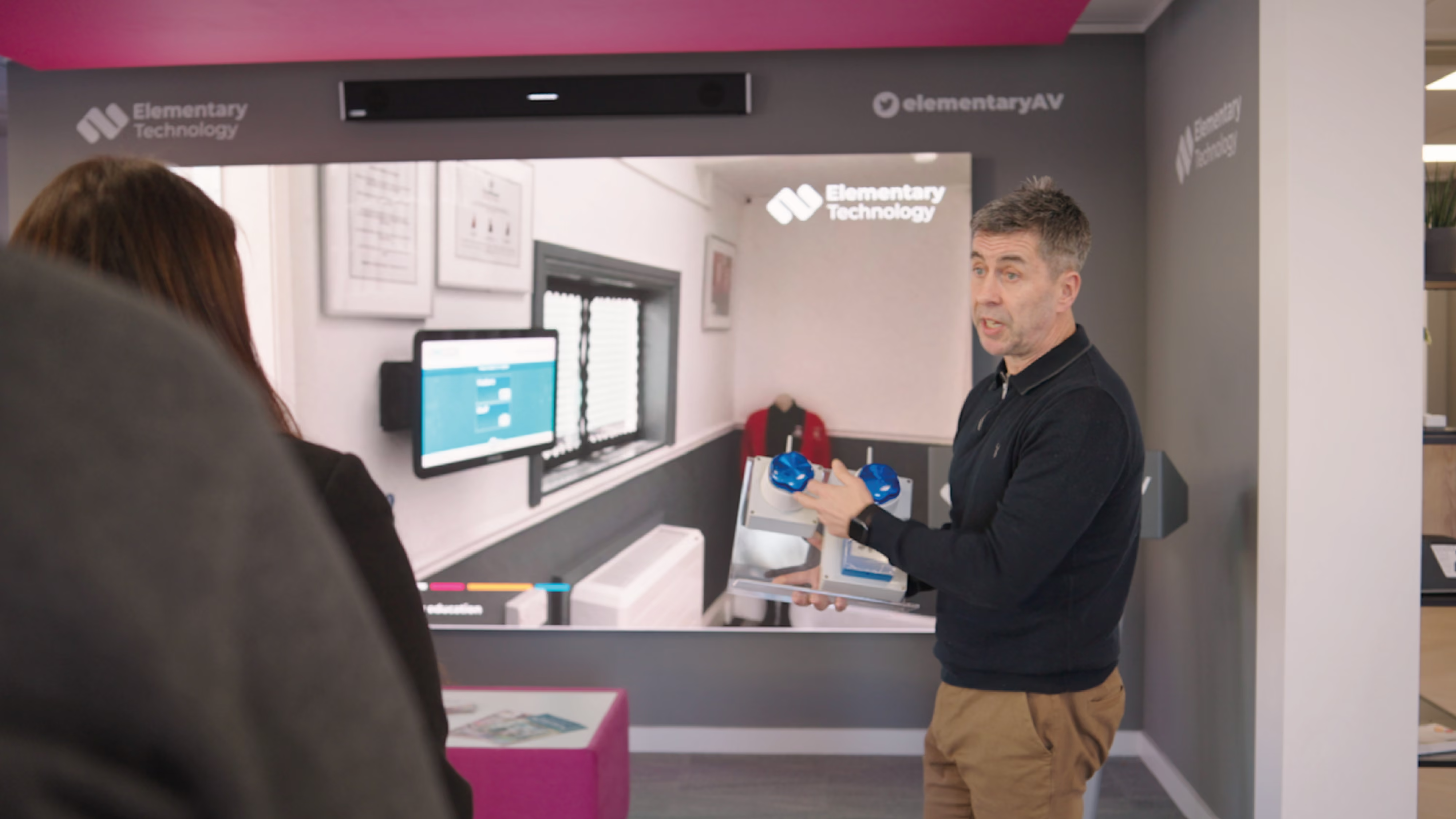


Triggering lockdown is no longer a last resort. It’s a safeguarding essential.
Can you actually respond respond when something happens? Tim highlights important questions around school lockdown and safeguarding policy.
Page title goes here
An introductory snippet of the page would go here and wrap like this it would be around this word count.
I’ve been working in safeguarding technology for schools for over twelve years now, and my understanding of what safeguarding actually means in practice has changed quite a lot over that time. It started with visitor management, specifically InVentry, which digitally records who comes in and out of a school site. Back then, that felt like a big deal, and honestly it was. But over time I realised it was really just the starting point.
The conversations I was having with school leaders, business managers and safeguarding leads gradually started to change. It stopped being just “who’s on site?” and became “what do we actually do when something goes wrong?” and “if something happened tomorrow, are we genuinely ready for it?”
I’ve heard a lot of stories in this job - unauthorised visitors getting through the gate, volatile situations with parents, police activity nearby, incidents that started off-site and ended up at the school door. Nearly all of them had something in common: the school had to make a fast call under pressure, and often didn’t have the right tools to support it.
What became obvious to me, and I’d say this was clear a good few years before the regulations caught up, is that evacuation is only half the picture. Schools have done fire drills for decades and rightly so, but knowing how to lock down, secure the building and communicate clearly when it’s safer to stay inside has really lagged behind. That’s changing now.
Safeguarding used to be judged a lot on whether your paperwork was in order. The question now is whether schools can actually respond when something happens, and whether the people and systems are genuinely in place. A few things have driven that shift.
Ofsted has been pretty clear that safeguarding is a limiting judgement - if it’s not up to scratch, nothing else compensates for it. Inspectors want to know whether staff understand what to do, whether procedures are genuinely embedded, and whether the school could respond properly if something actually happened.
The DfE’s guidance on school security, published on GOV.UK, is probably the most useful document for schools working through this. It sets out clearly what’s expected - controlling site access, communicating quickly with staff, securing buildings when needed, and managing lockdown, invacuation and evacuation. It expects systems to genuinely work. Most schools I speak to haven’t read it in detail, and I’d really encourage them to. It’s straightforward, practical, and gives a clear advice.
Martyn’s Law will be fully implemented next year and has added a legal dimension for schools. For me though, as this is more about public buildings than sites which are already secure, the DfE guidance is actually more important as they’ve adapted it for schools.
All three are pointing in the same direction though: it’s not enough to have a lockdown policy, you need to be able to show you can act on it.
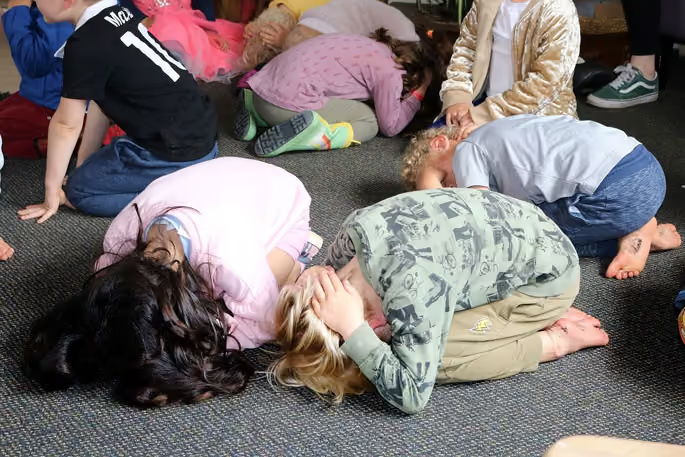
What good lockdown technology looks like
When budgets are tight, there’s a real temptation to treat lockdown as a tick-box - a procedure written down, a drill once a year, job done. I understand why that happens, but it doesn’t holdup when something actually occurs, and I’ve seen that enough times to know.
The schools that handle incidents well tend to have a few things working together properly. A lockdown alert system that gets the same message to every member of staff at the same time using a visual and a differentiated audio, with no reliance on word of mouth or someone running down a corridor with a bell, a loud haler or even a phone.
Access control that lets them lock doors and isolate areas quickly, without triggering a whole-site response when that isn’t needed.
Visitor management that tells them exactly who is on site at any given moment.
And site-wide communication, including outdoors, that keeps staff calm and makes it clear what they need to do. Intermittent fire bells don’t do this.
At Elementary Technology we work with systems including Audiebant, Team SOS, LOCAS, visual screen alerts solutions such as Vivi, Paxton and more – we’re truly an independent advisor.
The thing I’ve learned is that the schools with the strongest safeguarding aren’t always the ones with the most kit. They’re the ones that have understood what all the options are first, and then planned for everything to work together as a joined-up setup.
And none of it works properly without training. The schools that respond well to incidents are always the ones with the right systems that cover all bases, where they’ve had the right training on their use, and where lockdown is something they’ve actually practised.
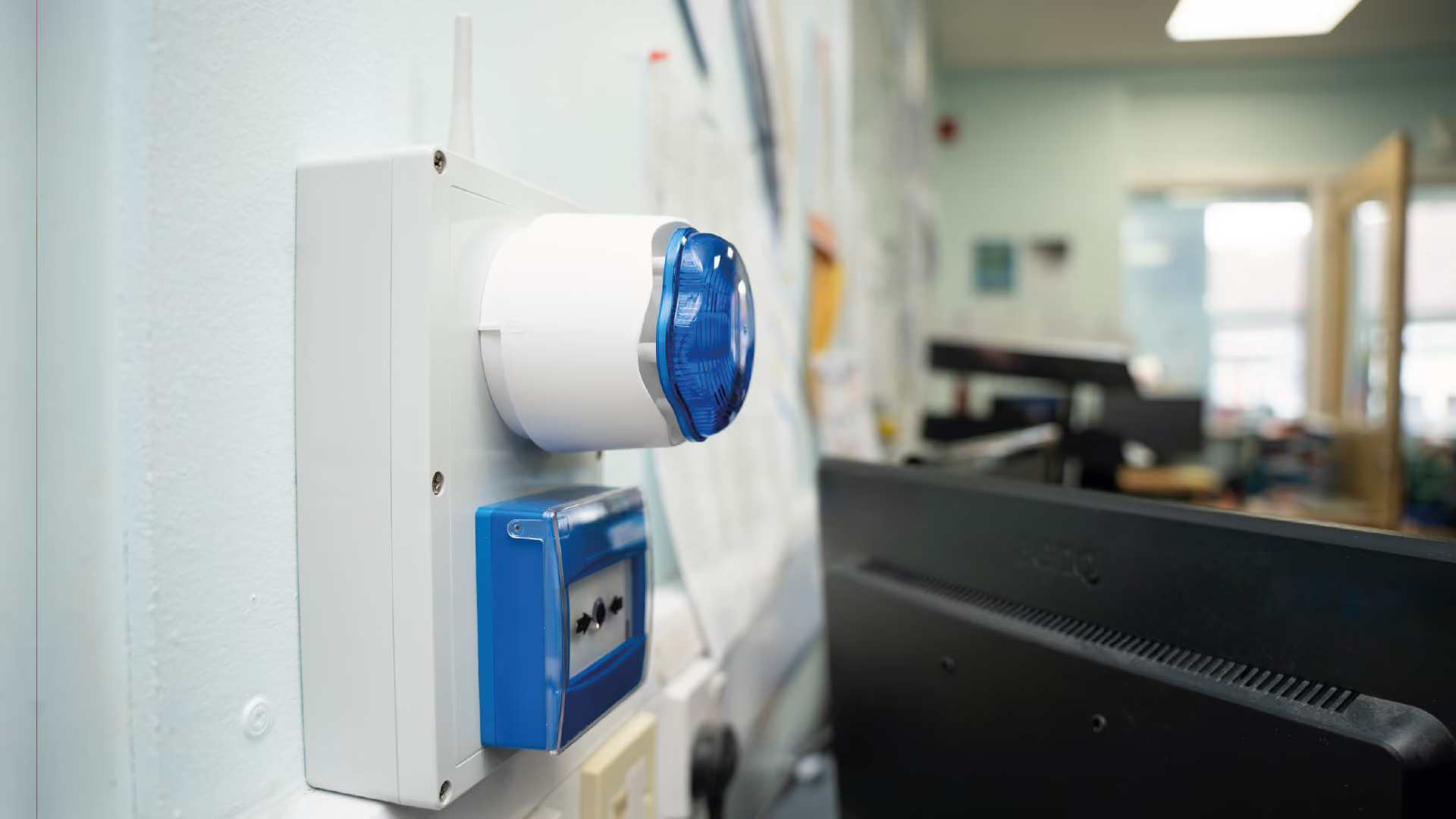
Worth a conversation?
The first question you should ask yourself is – how does your school trigger a lockdown, and is it good enough?
If you’re unsure or are reviewing your lockdown setup, whether that’s prompted by Martyn’s Law, an upcoming Ofsted visit, or a recent incident, I’m happy to talk it through. It doesn’t need to be a formal thing, just an honest conversation about where you are and what might help.
Get in touch through Elementary Technology, or connect with me directly here on LinkedIn.
Find out more about Lockdown Systems here.
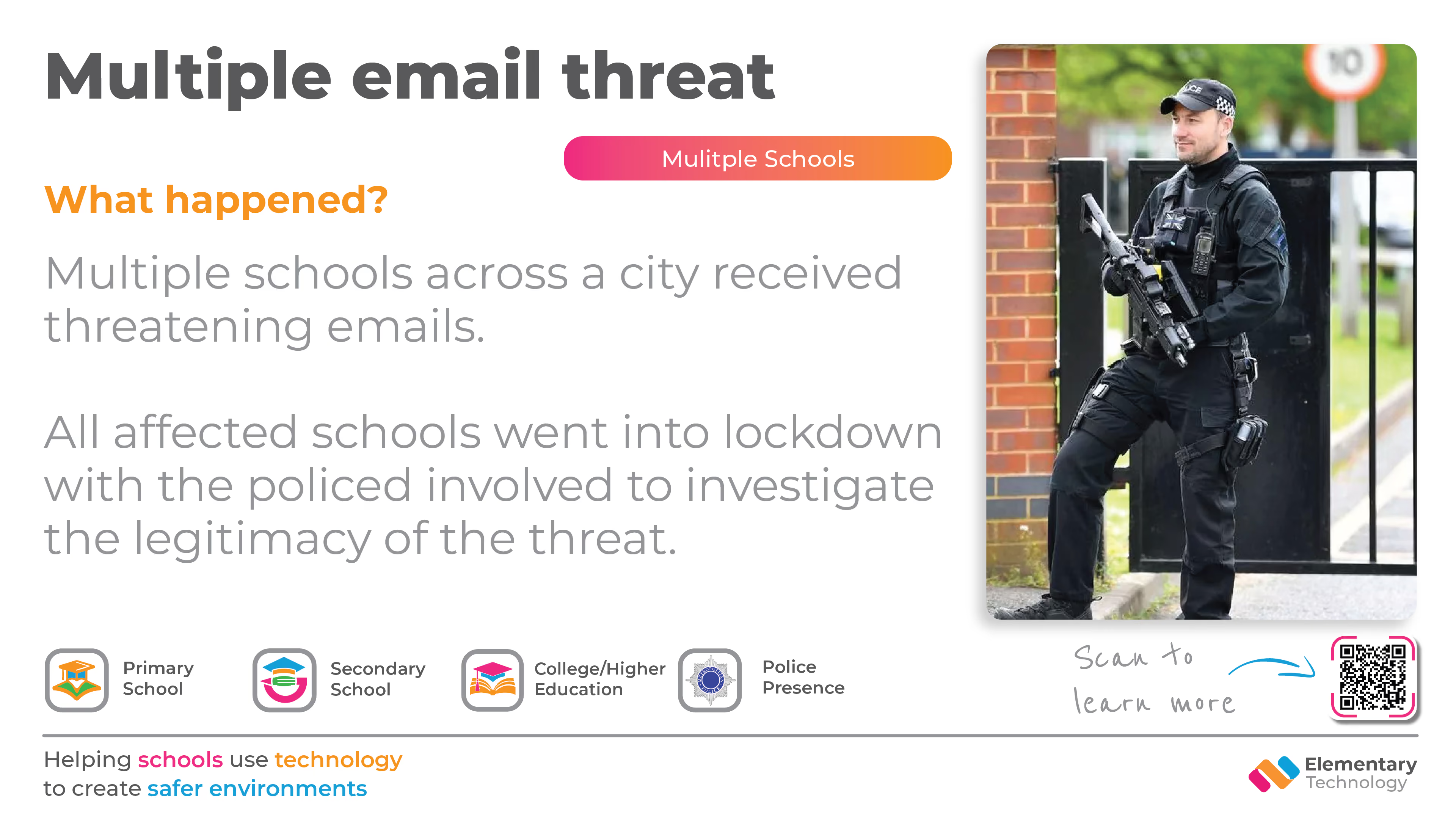
Frequently Asked Questions
Date: 14th May 2026
Written by Tim Kent
Product Specialist - Lockdown & Safeguarding, Elementary Technology
Email: t.kent@elementaryuk.com
Related insights

How does your school trigger lockdown?
Discover more considerations and options for lockdown systems for your school.
How does your school trigger lockdown?
Discover more considerations and options for lockdown systems for your school.